

Journey Trail Notes Poetry and the Reading Rope: Integrating All Strands of Skilled Reading
Welcome to the Journey To Better Reading Trail Notes Blog! This blog will make it easier for parents, teachers, and homeschoolers to find practical tools grounded in research to ensure that every moment you spend trying to improve reading does just that. We will start with one of the most important topics for anyone supporting a child’s reading growth: how the brain actually learns to read. Understanding this process helps parents, teachers, and homeschoolers know why certain approaches work and what to prioritize. Whether you teach in a classroom, guide learning at home, or support readers as a caregiver, you’ll find insights here that make reading instruction clearer and more purposeful.
Poetry is often treated as enrichment. Something to explore after “real reading” is done. In reality, poetry may be one of the most instructionally powerful text types we can use.
When students engage with poetry, they are not practicing a single skill. They are coordinating multiple systems simultaneously. Sound, structure, vocabulary, meaning, and interpretation all work together in ways that closely reflect how skilled reading actually develops.
This is precisely what Scarborough’s Reading Rope helps us understand.
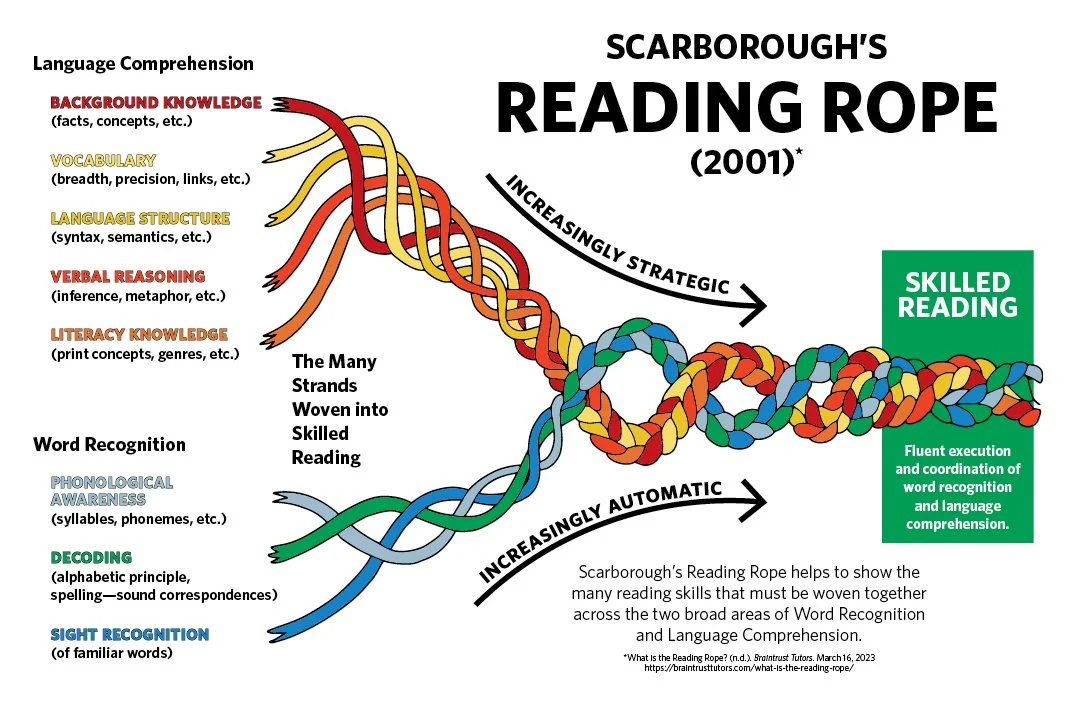
Scarborough’s model reminds us that reading is not a collection of isolated skills. It is the result of increasingly strategic interaction between:
Word recognition
Language comprehension
Poetry naturally invites this integration.
Unlike many instructional texts, poetry:
Requires attention to sound (phonology)
Encourages repeated reading (fluency)
Uses dense and layered language (vocabulary)
Demands interpretation (comprehension)
In this way, poetry is not an “extra.” It is an ideal context for developing multiple strands of reading at once.
Literacy Landmark
Spotlighting strategies and research to support all adults who are a part of a child’s reading growth.
Poetry brings multiple dimensions of skilled reading together within short, meaningful texts. With intentional instruction, a single poem can provide opportunities to strengthen sound awareness, fluent reading, language, and comprehension.
🔤 Sound & Word Recognition
Poetry makes the sound structure of language noticeable.
Rhyme, alliteration, rhythm, and repeated sound patterns invite younger readers to attend to the sounds within words. For developing readers, noticing recurring sound and spelling patterns can also reinforce connections between spoken and written language.
Research connection: Phonological awareness supports the development of word-reading skills, particularly when attention to sounds is connected explicitly to print (Ehri et al., 2001; National Reading Panel, 2000).
🗣️ Fluency & Prosody
Poetry gives students a reason to reread.
Short poems work especially well for modeled, echo, choral, and repeated reading. As students become more automatic with the words, they can devote greater attention to phrasing, expression, punctuation, and meaning.
Research connection: Guided repeated oral reading can improve word recognition, fluency, and comprehension, while prosody reflects the interaction between fluent word reading and meaning-making (Kuhn et al., 2010; Rasinski, 2012).
💬 Vocabulary & Language
Poetry makes every word matter.
Figurative language, multiple meanings, imagery, precise vocabulary, and sometimes unusual syntax create natural opportunities to examine how language works. Asking Why this word? can lead to richer discussion than simply asking students to define it.
Research connection: Robust vocabulary learning involves repeated, meaningful engagement with words, along with opportunities to discuss and use them in varied contexts (Beck et al., 2013).
🧠 Comprehension & Interpretation
Poetry asks readers to think beyond what is explicitly stated.
Readers infer, interpret figurative language, consider tone and purpose, connect ideas across lines, draw on background knowledge, and justify interpretations with textual evidence.
Research connection: Reading comprehension depends on the coordination of language, knowledge, inference, and other cognitive processes—not the application of comprehension strategies in isolation (Cervetti & Wright, 2020; Duke et al., 2021).
The important connection
These processes do not operate separately when students actually read.
A student performing a poem with meaningful phrasing is simultaneously recognizing words, processing syntax and vocabulary, interpreting meaning, and using that understanding to determine expression.
That is what makes poetry so valuable: it gives students a manageable text in which many strands of skilled reading can work together.
Resource Roadmap
Offering practical books, guides, and downloadable resources that families, teachers, and homeschoolers can use right away.
Poetry Foundation — Educator Resources
→ Find poems, audio recordings, poem guides, teaching ideas, and resources organized by grade level.
Children's Poetry Archive
→ Let students hear poetry performed aloud while exploring poems organized for children by age and theme.
Reading Rockets — Fluency Instruction & Activities
→ Explore research-informed guidance for using short texts, including poetry, for modeled and repeated oral reading.
🖋️ These resources are not sponsored. They are included because they provide useful, accessible connections between research and classroom practice.
Practical Pathways for Supporting Meaningful Reading
All strategies below can be used at home, in classrooms, or in homeschool settings.
Trail Tots (Birth–5)
Focus: Oral language, rhythm, and early comprehension
Try this:
Read simple poems and nursery rhymes aloud with expression
Emphasize rhythm, rhyme, and repetition
Invite children to join in with predictable words or phrases
Ask open-ended questions such as “What did you notice?” “How did it sound?”
Why it matters:
Rhymes and poems provide playful experiences with the sound structure of language while also building oral language and listening comprehension.
Trailblazers (Grades K–3)
Focus: Fluency and foundational comprehension
Try this:
Use echo, choral reading, and repeated reading with short poems
Notice rhyme, rhythm, and word patterns
Discuss unfamiliar or interesting words
Ask students to explain the meaning in their own words
Why it matters:
Short, engaging texts provide opportunities for meaningful rereading while students coordinate increasingly automatic word recognition with language and comprehension.
Trail Masters (Grades 4–8)
Focus: Interpretation, structure, and analysis
Try this:
Analyze figurative language, imagery, and tone
Discuss how the structure contributes to meaning
Examine how word choices affect tone
Use short written responses to support interpretation
Why it matters:
Poetry gives older readers a compact but sophisticated text through which to integrate vocabulary, knowledge, verbal reasoning, text structure, and comprehension.
Why Poetry Belongs in Reading Instruction
Poetry brings sound, language, structure, knowledge, and meaning together in an unusually concentrated form.
When students read a poem, reread it aloud, examine its language, discuss competing interpretations, and support their thinking with evidence, they are doing far more than studying poetry.
They are reading.
And when we use poetry intentionally, we give students repeated opportunities to experience something Scarborough's Reading Rope illustrates so well:
Skilled reading is not the mastery of isolated parts. It is the increasingly coordinated use of many processes in the service of meaning.
Connecting Instruction to Practice
To support this process, I created a FREE Poetry Analysis & Comprehension Routine that guides students through repeated reading, analysis, and response.
This tool helps students move from noticing features of a poem to constructing meaning from it.
Journey Trail Notes From Words to Meaningful Reading
Welcome to the Journey To Better Reading Trail Notes Blog! This blog will make it easier for parents, teachers, and homeschoolers to find practical tools grounded in research to ensure that every moment you spend trying to improve reading does just that. We will start with one of the most important topics for anyone supporting a child’s reading growth: how the brain actually learns to read. Understanding this process helps parents, teachers, and homeschoolers know why certain approaches work and what to prioritize. Whether you teach in a classroom, guide learning at home, or support readers as a caregiver, you’ll find insights here that make reading instruction clearer and more purposeful.
How Fluency, Verbal Reasoning, and Literacy Knowledge Complete the Reading Rope
After tracing the foundations and developmental strands of Scarborough’s Reading Rope in previous blogs from phonemic awareness and background knowledge through phonics, vocabulary, orthographic mapping, and syntax, this final blog in this series examines the strands that consolidate skilled reading.
As readers develop, the work of reading shifts. Decoding individual words becomes increasingly automatic, and attention turns toward constructing meaning across sentences, paragraphs, and entire texts. This shift reflects the upper strands of Scarborough’s Reading Rope, which become more strategic and integrative over time. As word recognition becomes increasingly automatic, language comprehension processes take on a greater cognitive load.
Fluency, verbal reasoning, and literacy knowledge work together to transform accurate reading into meaningful reading. Fluency bridges the gap between word recognition and comprehension. Verbal reasoning allows readers to go beyond the literal. Literacy knowledge provides an organizational framework for understanding how texts work.
Literacy Landmark
Spotlighting strategies and research to support all adults who are a part of a child’s reading growth.
Fluency reflects cognitive efficiency in word recognition. It includes accuracy, appropriate rate, and prosody—features that signal the integration of decoding with syntactic and semantic processing.
Verbal reasoning enables readers to infer, predict, interpret figurative language, and integrate ideas that are not explicitly stated. For example, when a reader infers a character’s motivation without it being explicitly stated, they are integrating textual evidence with background knowledge. These skills depend on both background knowledge and instruction in reasoning from texts.
Literacy knowledge refers to understanding how texts are structured. Narrative, informational, and argumentative texts follow predictable organizational patterns. Narrative, informational, and argumentative texts follow predictable organizational patterns. Explicit instruction in these structures increases students’ ability to anticipate meaning and organize information while reading. Recognizing these patterns supports comprehension, recall, and analysis.
Key research insight:
Fluency, reasoning, and text knowledge do not develop automatically. They require explicit modeling, guided practice, and consistent exposure to rich texts and discussion. Together, these strands enable readers to move beyond accurate word reading toward deep comprehension.
Resource Roadmap
Offering practical books, guides, and downloadable resources that families, teachers, and homeschoolers can use right away.
Research-aligned resources that support the upper strands of Scarborough’s Rope:
The Megabook of Fluency (Rasinski & Zutell)
Clarifies how fluency instruction supports comprehension through phrasing and prosody.
Strategies That Work (Harvey & Goudvis)
Provides practical routines for teaching reasoning, inference, and comprehension strategies.
Video: For a current, practical explanation of how fluency supports comprehension, Anna Geiger recently shared a concise video clarifying how repeated reading, phrasing, and accuracy work together in instruction.
🖋️ These resources are not sponsored and reflect evidence-based practice.
Practical Pathways for Supporting Meaningful Reading
All strategies below can be used at home, in classrooms, or in homeschool settings.
Trail Tots (Birth–5)
Focus: Oral language, early reasoning, and text awareness
Try this:
Read aloud daily, modeling expressive phrasing.
Ask open-ended questions that prompt thinking (“Why do you think that happened?”).
Talk about story structure using simple terms (beginning, middle, end).
Introduce informational texts and explain how they are organized.
Why it works:
Builds oral reasoning, narrative awareness, and early comprehension foundations.
Trailblazers (Grades K–3)
Focus: Developing fluency and basic reasoning
Try this:
Practice fluency through echo reading, partner reading, and phrase-cued text.
Ask students to predict, explain, and justify their thinking.
Highlight text features and story structure during read-alouds.
Encourage connections between text and background knowledge.
Why it works:
Supports automaticity while strengthening comprehension and meaning-making.
Trail Masters (Grades 4–8)
Focus: Strategic comprehension and text analysis
Try this:
Model fluent reading of complex passages and practice reading in meaningful chunks.
Teach students to identify evidence that supports inferences.
Analyze how genre and structure influence meaning.
Use short writing tasks to reinforce reasoning and organization.
Why it works:
Strengthens advanced comprehension through integrated fluency, reasoning, and structure.
How to Use This Across Settings
Parents: Focus on expressive reading and discussion rather than speed.
Teachers: Integrate fluency, reasoning, and text structure into daily instruction.
Homeschoolers: Use thematic units and discussion to build knowledge and meaning.
Why this matters
Fluency makes reading efficient. Verbal reasoning enables interpretation. Literacy knowledge organizes understanding. When these strands are intentionally developed together, readers move beyond accuracy to a deeper, more purposeful comprehension.
Need help getting started with Fluency tracking? Check this out:
Fluency develops from accurate decoding and purposeful repeated reading, not from speed drills. Structured fluency routines must be grounded in explicit instruction and careful text selection.
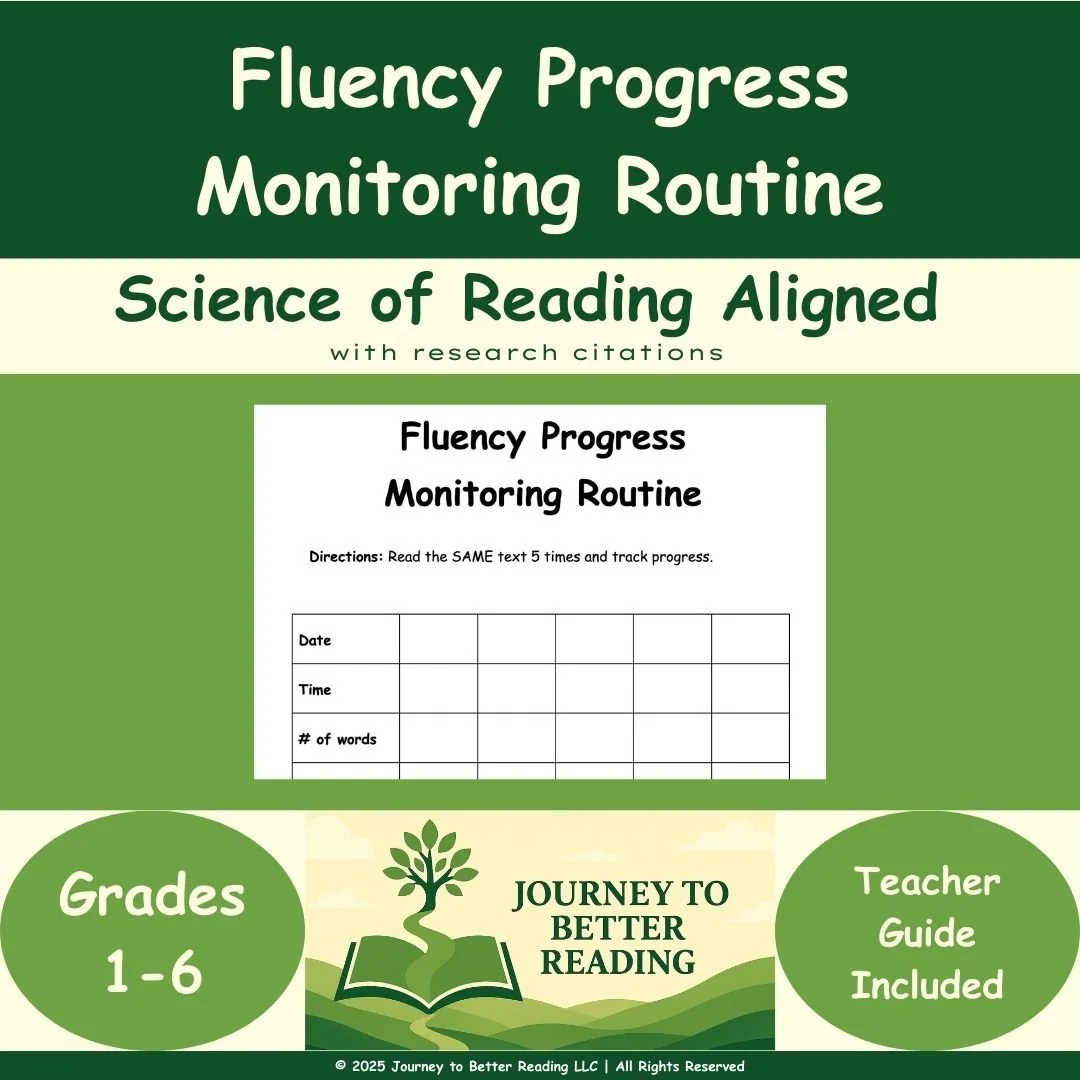
The Fluency Progress Monitoring Routine supports teachers in guiding and interpreting data from repeated readings.
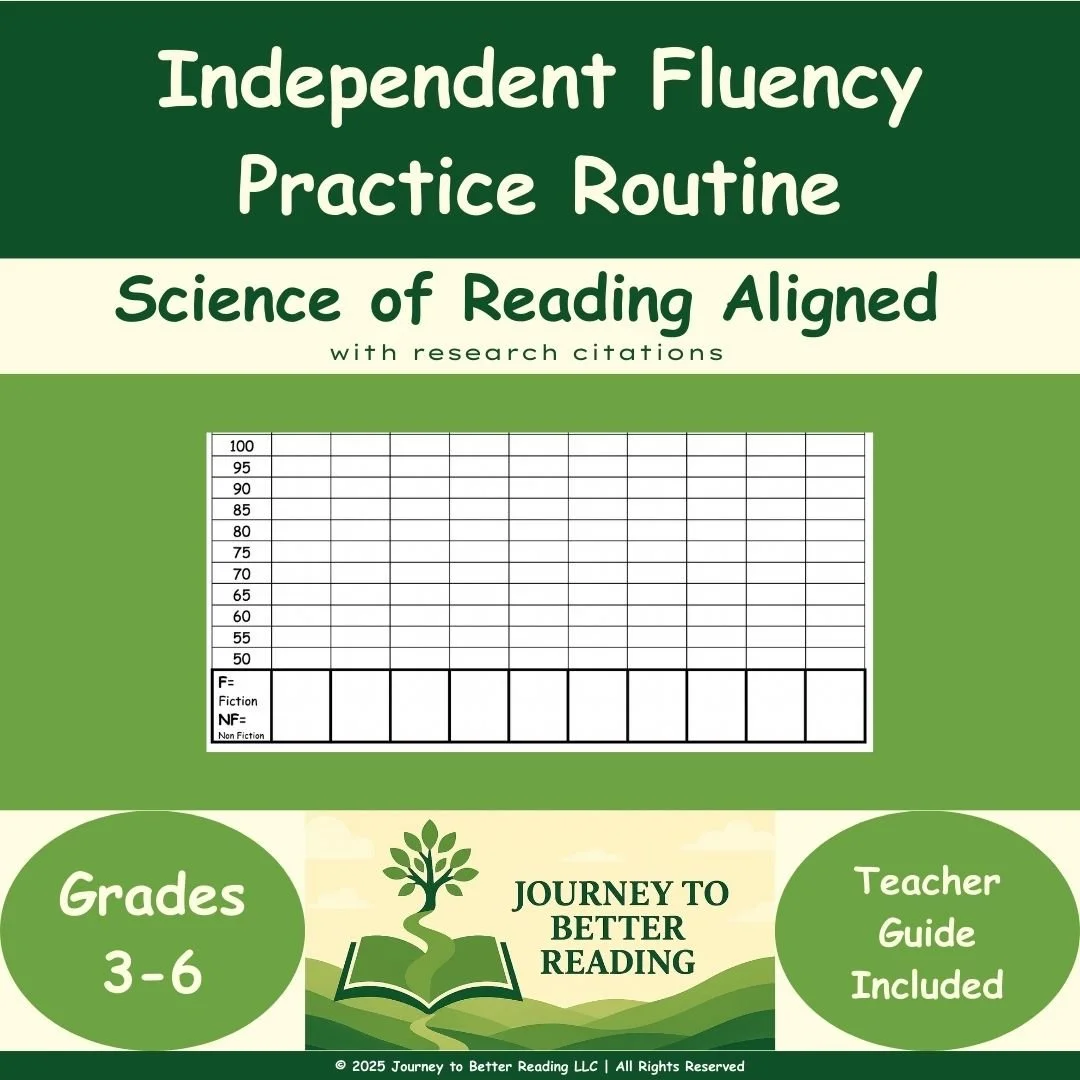
The Fluency Practice & Progress Monitoring Routine provides a structured home practice tool aligned with these principles.
Looking Down The Trail
Across the past four blogs in this series, skilled reading is shown to emerge through the coordinated development of all strands, woven together over time through instruction and experience. Future posts will continue to explore key dimensions of reading development and instruction, so stay tuned! Reading is not a collection of isolated skills; it is the coordinated development of knowledge, language, and cognitive efficiency over time.
Journey Trail Notes Storing Words, Understanding Sentences
Welcome to the Journey To Better Reading Trail Notes Blog! This blog will make it easier for parents, teachers, and homeschoolers to find practical tools grounded in research to ensure that every moment you spend trying to improve reading does just that. We will start with one of the most important topics for anyone supporting a child’s reading growth: how the brain actually learns to read. Understanding this process helps parents, teachers, and homeschoolers know why certain approaches work and what to prioritize. Whether you teach in a classroom, guide learning at home, or support readers as a caregiver, you’ll find insights here that make reading instruction clearer and more purposeful.
How Orthographic Mapping and Syntax Support Fluent Reading
The last two blogs established the foundational anchors of Scarborough’s Reading Rope and examined the interaction of phonics and vocabulary; now, this blog turns to the next stage of reading development, where efficiency in word recognition and precision in sentence processing become essential.
As children become more accurate decoders, reading success depends on efficiency and meaning. Skilled readers recognize familiar words instantly and interpret increasingly complex sentences with ease. Scarborough’s Reading Rope captures this progression through the strands of orthographic mapping and syntax, which work together to support fluent, meaningful reading.
Orthographic mapping strengthens word recognition by storing written words permanently in memory. Syntax strengthens comprehension by helping readers understand how words function together in sentences. Both are essential for fluent reading.
Literacy Landmark
Spotlighting strategies and research to support all adults who are a part of a child’s reading growth.
Orthographic mapping is the process through which readers form permanent connections between sounds and spellings. Words are not memorized visually. They are remembered because phonemes have been accurately mapped to graphemes through repeated, successful decoding.
Syntax refers to sentence structure. Comprehension depends on understanding how word order, phrases, and clauses convey meaning. Even when individual words are known, complex syntax can disrupt understanding if it is not explicitly taught.
Key research insight:
Research suggests that strong phonemic proficiency facilitates orthographic mapping, while explicit instruction in sentence structure enhances reading comprehension. Efficient word recognition and syntactic understanding develop together.
Resource Roadmap
Offering practical books, guides, and downloadable resources that families, teachers, and homeschoolers can use right away.
Research-aligned resources that explain and support these strands:
Equipped for Reading Success (David Kilpatrick)
Clarifies the role of phonemic proficiency in orthographic mapping and fluent word recognition.
The Writing Revolution (Judith Hochman & Natalie Wexler)
Provides practical strategies for strengthening syntax through sentence-level instruction.
🖋️ These resources are not sponsored and reflect evidence-based practice.
Practical Pathways for Supporting Reading Development
All strategies below can be used at home, in classrooms, or in homeschool settings.
Trail Tots (Birth–5)
Focus: Early sound awareness and sentence exposure
Try this:
Play oral blending and segmenting games during books and daily routines.
Read aloud frequently and model rich, complete sentences.
Invite children to repeat or finish patterned sentences in familiar stories.
Why it works:
Builds early phonemic awareness while exposing children to sentence structure and fluent language.
Trailblazers (Grades K–3)
Focus: Mapping words and understanding sentence meaning
Try this:
Stretch sounds and write letters to map words explicitly.
Analyze high-frequency words by identifying regular and irregular spellings.
Discuss who is doing what in a sentence and reread with expression.
Why it works:
Supports automatic word recognition while strengthening sentence-level comprehension.
Trail Masters (Grades 4–8)
Focus: Efficient word storage and complex sentence comprehension
Try this:
Teach strategies for decoding and storing multisyllabic words.
Break complex sentences into meaningful chunks.
Use sentence combining and expanding to explore how structure shapes meaning.
Why it works:
Strengthens fluency and comprehension by integrating word recognition with syntactic understanding.
How to Use This Across Settings
Parents: Focus on short sound-based activities paired with talk about sentence meaning.
Teachers: Integrate orthographic mapping and sentence work into reading and writing instruction.
Homeschoolers: Use hands-on word study and discussion to reinforce structure and meaning.
Why this matters
Fluent reading depends on instant word recognition and accurate sentence interpretation. When orthographic mapping and syntax are intentionally taught together, students gain the efficiency and understanding needed for complex reading tasks.
Need help getting started with Orthographic Mapping? Check this out:
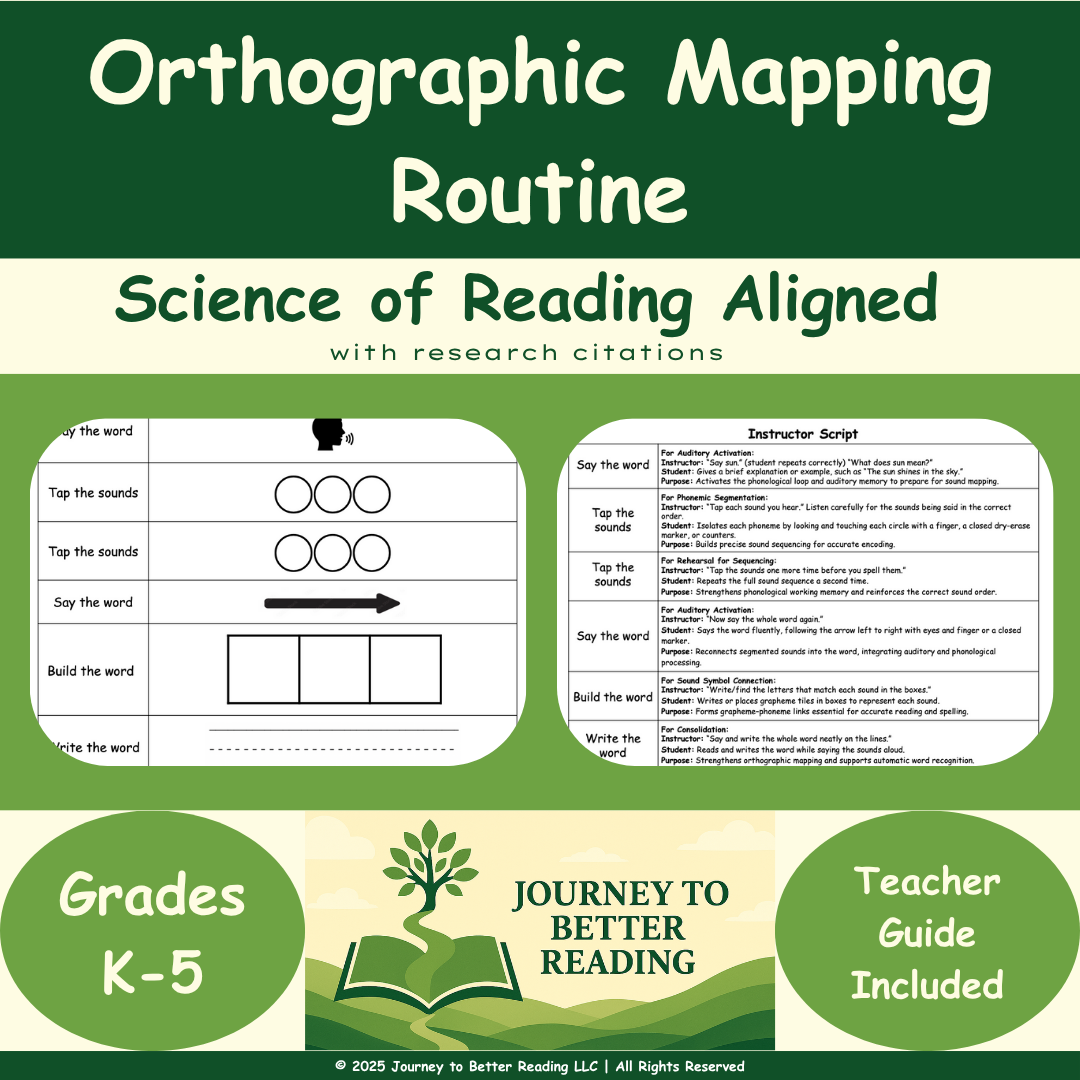
Looking Down The Trail
In the next blog, you’ll find an examination of how fluency, verbal reasoning, and literacy knowledge integrate earlier skills to support comprehension across extended texts.
Follow
Journey Trail Notes Building the Code, Building the Words
Welcome to the Journey To Better Reading Trail Notes Blog! This blog will make it easier for parents, teachers, and homeschoolers to find practical tools grounded in research to ensure that every moment you spend trying to improve reading does just that. We will start with one of the most important topics for anyone supporting a child’s reading growth: how the brain actually learns to read. Understanding this process helps parents, teachers, and homeschoolers know why certain approaches work and what to prioritize. Whether you teach in a classroom, guide learning at home, or support readers as a caregiver, you’ll find insights here that make reading instruction clearer and more purposeful.
How Phonics and Vocabulary Work Together
In the previous blog, phonemic awareness and background knowledge were identified as the foundational anchors of Scarborough’s Reading Rope. This blog will cover two central strands, phonics and vocabulary, that interact to support fluent, meaningful reading.
Scarborough’s Reading Rope shows that skilled reading develops through the interaction of word recognition and language comprehension. Within this framework, phonics and vocabulary sit at the center, working together to help readers accurately decode words and understand their meaning.
Phonics provides the reliable code readers need to unlock unfamiliar words. Vocabulary gives those words meaning. When these strands grow together, readers move more efficiently from print to understanding.
Literacy Landmark
Spotlighting strategies and research to support all adults who are a part of a child’s reading growth.
Phonics instruction teaches how written language represents speech sounds and meaningful word parts. English spelling reflects both sound and meaning, making explicit, systematic phonics instruction essential.
Vocabulary development involves more than learning definitions. It includes depth of understanding, connections between concepts, and flexible use of words across contexts. Vocabulary and background knowledge grow through direct instruction, repeated exposure, and meaningful language use.
Key research insight:
Research consistently shows that systematic phonics instruction improves word recognition and spelling, while explicit vocabulary and knowledge-building instruction strengthen comprehension. When phonics and vocabulary are taught together, reading becomes more accurate, fluent, and meaningful.
Resource Roadmap
Offering practical books, guides, and downloadable resources that families, teachers, and homeschoolers can use right away.
Anchor Text: Building Meaning Through Words
Bringing Words to Life by Beck, McKeown, & Kucan
This text provides a clear, research-based framework for teaching vocabulary in a deep, intentional, and cumulative way. Grounded in decades of cognitive and literacy research, Bringing Words to Life introduces the concept of robust vocabulary instruction, emphasizing word selection, repeated exposure, student-friendly explanations, and meaningful use across contexts.
Rather than treating vocabulary as a list to be memorized, the authors position word knowledge as a driver of language comprehension, reading comprehension, and long-term academic success.
Why this helps:
If you recognize that “knowing words matters” but are unsure how vocabulary instruction actually supports comprehension, this book clarifies what to teach, why it matters, and how to implement instruction that sticks. It makes explicit the often-invisible connection between oral language, background knowledge, and skilled reading.
Listen and Learn: Vocabulary and Language Comprehension Explained
Sold a Story — Vocabulary and Comprehension Episodes
This investigative podcast is widely known for its exploration of reading instruction, but several episodes and companion discussions explicitly address vocabulary, language comprehension, and instructional coherence. Through interviews with researchers and practitioners, it highlights how weak vocabulary instruction undermines comprehension even when decoding appears strong.
Why this helps:
This resource reinforces the message that phonics alone is not enough. It helps listeners understand how vocabulary and language comprehension fit into the broader reading system and why neglecting these strands creates fragile readers. The podcast format also makes the research more accessible to families and educators who prefer audio learning.
🖋️ These resources are not sponsored and were selected because they reflect well-established, evidence-based practice and offer clear entry points into understanding how vocabulary and language comprehension contribute to skilled reading across ages and settings.
Practical Pathways for Supporting Reading Development
All strategies below can be used at home, in classrooms, or in homeschool settings.
Trail Tots (Birth–5)
Focus: Early sound awareness and word learning
Try this:
Talk throughout the day about objects, actions, and experiences.
Read aloud frequently, naming unfamiliar words and explaining ideas.
Play sound-based games that emphasize beginning sounds and simple word families.
Why it works:
Builds early phonological awareness while expanding vocabulary and conceptual knowledge.
Trailblazers (Grades K–3)
Focus: Connecting phonics and meaning
Try this:
Practice phonics patterns through word building, blending, and decodable texts.
Teach high-frequency words through spelling analysis and orthographic mapping rather than visual memorization.
Highlight and discuss new vocabulary during read-alouds and content lessons.
Why it works:
Strengthens automatic word recognition while supporting vocabulary growth and comprehension.
Trail Masters (Grades 4–8)
Focus: Advanced word reading and vocabulary depth
Try this:
Teach prefixes, suffixes, and roots to support decoding and meaning.
Break multisyllabic words into syllables and meaningful parts during reading.
Reinforce vocabulary through discussion, writing, and content-rich reading.
Why it works:
Supports fluent access to complex text while deepening understanding through language and knowledge.
How to Use This Across Settings
Parents: Pair morphology practice with conversation and word exploration.
Teachers: Integrate morphology and vocabulary instruction within the same lesson block.
Homeschoolers: Use consistent, cumulative routines that connect sound, print, and meaning.
Why this matters
Phonics allows readers to access words. Vocabulary allows them to understand what they read. When these strands grow together, reading becomes more accurate, fluent, and meaningful.
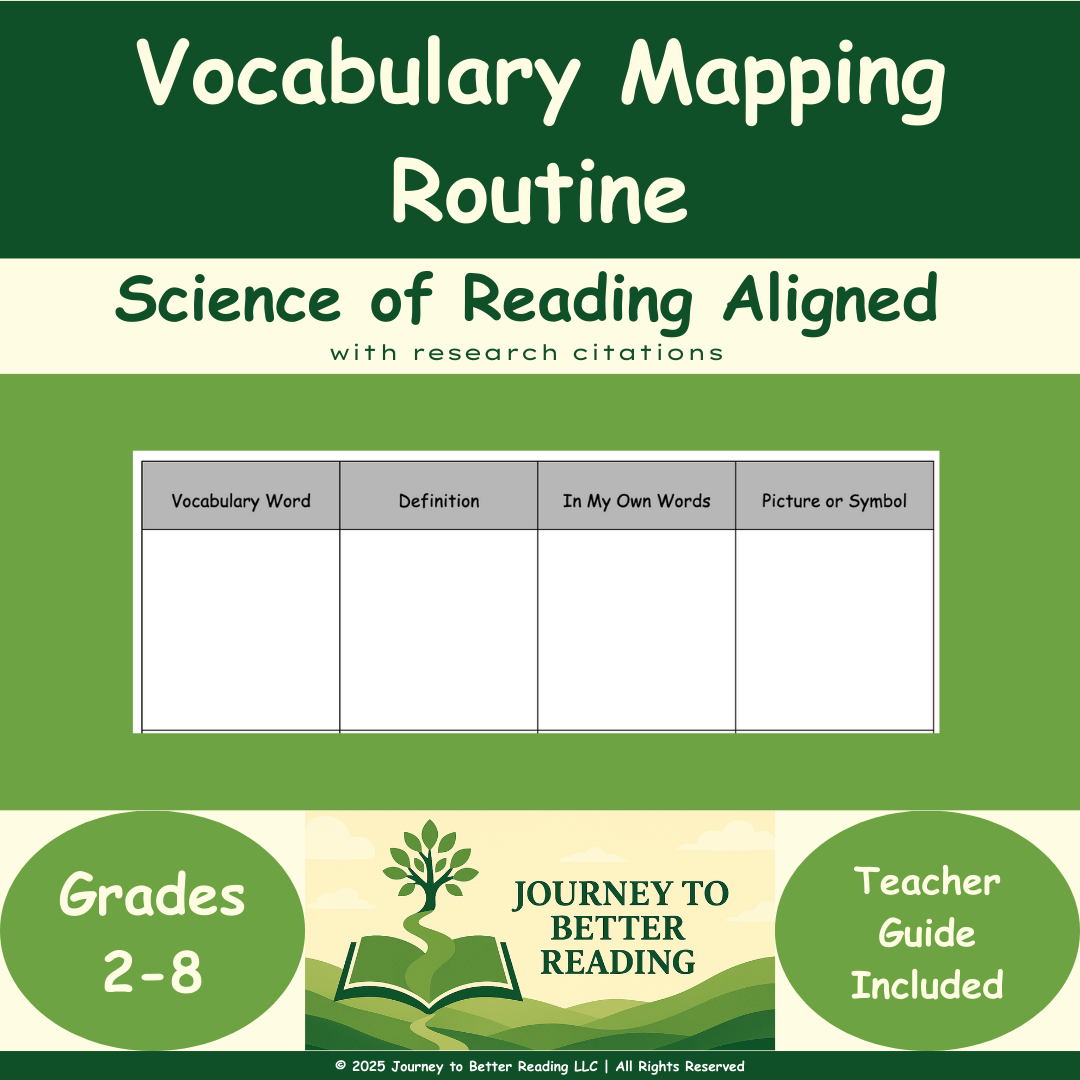
Need a Vocabulary Activity?
Check out this FREE Resource:
Looking Down The Trail
In the next blog, you’ll find a discussion of how orthographic mapping and syntax support efficiency and structure as reading becomes more fluent.
Follow
Journey Trail Notes: Laying the Foundations
Welcome to the Journey To Better Reading Trail Notes Blog! This blog will make it easier for parents, teachers, and homeschoolers to find practical tools grounded in research to ensure that every moment you spend trying to improve reading does just that. We will start with one of the most important topics for anyone supporting a child’s reading growth: how the brain actually learns to read. Understanding this process helps parents, teachers, and homeschoolers know why certain approaches work and what to prioritize. Whether you teach in a classroom, guide learning at home, or support readers as a caregiver, you’ll find insights here that make reading instruction clearer and more purposeful.
Hearing the Sounds, Knowing the World
After examining the Simple View of Reading as a foundational model in the last couple of blogs, it is useful to move toward a framework that captures how reading develops over time and why instruction must be both systematic and expansive.
Scarborough’s Reading Rope expands on the Simple View of Reading by showing how multiple strands of skill work together over time. The lower strands represent word recognition, which becomes increasingly automatic. The upper strands represent language comprehension, which becomes increasingly strategic. Skilled reading emerges when these strands are tightly woven together.
Before exploring each strand in depth, it’s essential to understand the foundations on which the Rope rests:
Phonemic awareness for word recognition
Background knowledge for language comprehension
Hearing the sounds and knowing the world anchor every later strand of reading development.
Literacy Landmark
Spotlighting strategies and research to support all adults who are a part of a child’s reading growth.
Phonemic awareness, the ability to hear and manipulate individual sounds in spoken language, is the foundation of word recognition. Without it, children struggle to connect speech to print.
Background knowledge is the foundation of language comprehension. Even fluent decoding cannot support comprehension if readers lack the necessary concepts and experiences to make sense of the text.
Key research insight:
Scarborough’s Reading Rope demonstrates that reading success depends on the integration of these strands. When foundations are weak, later instruction cannot compensate. Learn more about Scarborough’s Reading Rope with this video.
Resource Roadmap
Offering practical books, guides, and downloadable resources that families, teachers, and homeschoolers can use right away.
Anchor Text: From Research to Action
Reach All Readers by Anna Geiger
A research-aligned, practitioner-friendly guide that connects foundational reading science, including the Simple View of Reading and Scarborough’s Reading Rope, with clear instructional routines and strategies. This book helps adults understand why specific reading skills are essential and how to support them in both the classroom and at home.
Why this helps:
For readers who understand that phonemic awareness and background knowledge are important but are unsure how to translate this into effective instruction, this book provides a coherent bridge from theory to practice.
Listen and Learn: Foundations Explained
The Simple View of Reading and Scarborough’s Reading Rope
This podcast is available in both written form and an accompanying discussion. It breaks down the Simple View and Scarborough’s Rope in a way that is accessible to educators, parents, and caregivers.
Why this helps:
This link provides a concise, multimedia-friendly explanation of the frameworks discussed in this blog, making it easier to revisit and internalize the core concepts on the go.
🖋️ These resources are not sponsored and were selected because they reflect evidence-based practice and provide accessible entry points into reading science that supports instruction and understanding across ages and settings.
Practical Foundations Across Ages
All strategies below can be used at home, in classrooms, or in homeschool settings with minimal materials.
Trail Tots (Birth–5)
Focus: Phonological awareness and background knowledge
Try this:
Engage in rich conversation during daily routines (meals, errands, play).
Read aloud daily and talk about pictures, ideas, and events.
Play with sounds through rhymes, syllable clapping, and noticing beginning sounds.
Slowly blend simple words aloud (“/s/…/un/”) during play or reading.
Why it works:
Builds early sound awareness while expanding vocabulary and world knowledge, laying the neural foundation for later reading.
Trailblazers (Grades K–3)
Focus: Phonemic proficiency and growing knowledge
Try this:
Practice brief phonemic awareness activities by manipulating sounds:
adding: say cat - add /s/ to the beginning = scat
deleting: say cat - take away the /c/ sound = at
substituting: say cat - change the /c/ sound to /m sound = mat)
Reinforce phonics patterns through word reading, word building, and decodable texts.
Teach high-frequency words through sound analysis and orthographic mapping.
Use handwriting to strengthen sound–symbol integration.
Read aloud daily and discuss vocabulary, concepts, and meaning.
Why it works:
Strengthens automatic word recognition while expanding the language and knowledge needed for comprehension.
Trail Masters (Grades 4–8)
Focus: Advanced word reading and knowledge-driven comprehension
Try this:
Teach syllable types and vowel patterns for multisyllabic decoding.
Introduce prefixes, suffixes, and roots to support decoding and vocabulary growth.
Build vocabulary through morphology and semantic connections.
Use comprehension routines that emphasize summarizing, questioning, and inferencing.
Incorporate structured writing to strengthen syntax and text organization.
Why it works:
Supports fluent access to complex text while deepening meaning through the integration of language and knowledge.
How to Use This Across Settings
Parents: Focus on short, meaningful language moments paired with sound play.
Teachers: Integrate decoding and knowledge-building within the same lesson block.
Homeschoolers: Use consistent, cumulative routines that connect sound, print, and meaning.
Why this matters
Scarborough’s Reading Rope reminds us that reading instruction must be built from the ground up. When phonemic awareness and background knowledge are intentionally developed, the strands of reading can be woven into a strong, flexible rope that supports lifelong reading success.
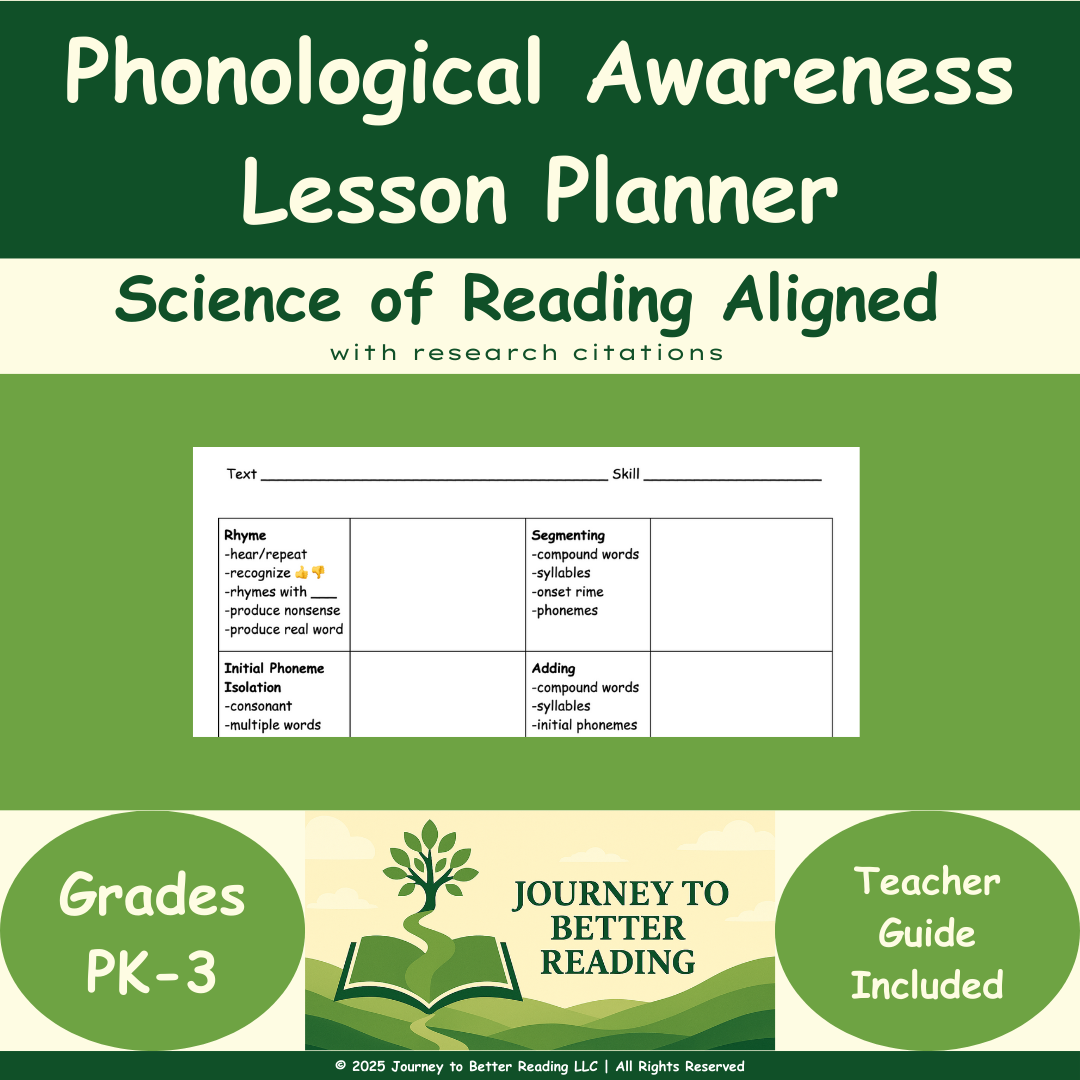
Need help getting started with Phonological Awareness Lesson Planning?
Check this out:
Looking Down The Trail
In the next blog, you’ll find an exploration of how phonics and vocabulary work together as part of Scarborough’s rope to connect accurate word reading with meaning.
Follow
Journey Trail Notes Game Time
Welcome to the Journey To Better Reading Trail Notes Blog! This blog will make it easier for parents, teachers, and homeschoolers to find practical tools grounded in research to ensure that every moment you spend trying to improve reading does just that. We will start with one of the most important topics for anyone supporting a child’s reading growth: how the brain actually learns to read. Understanding this process helps parents, teachers, and homeschoolers know why certain approaches work and what to prioritize. Whether you teach in a classroom, guide learning at home, or support readers as a caregiver, you’ll find insights here that make reading instruction clearer and more purposeful.
Play to Learn:
How Simple Games Strengthen the Language Comprehension Side of Reading
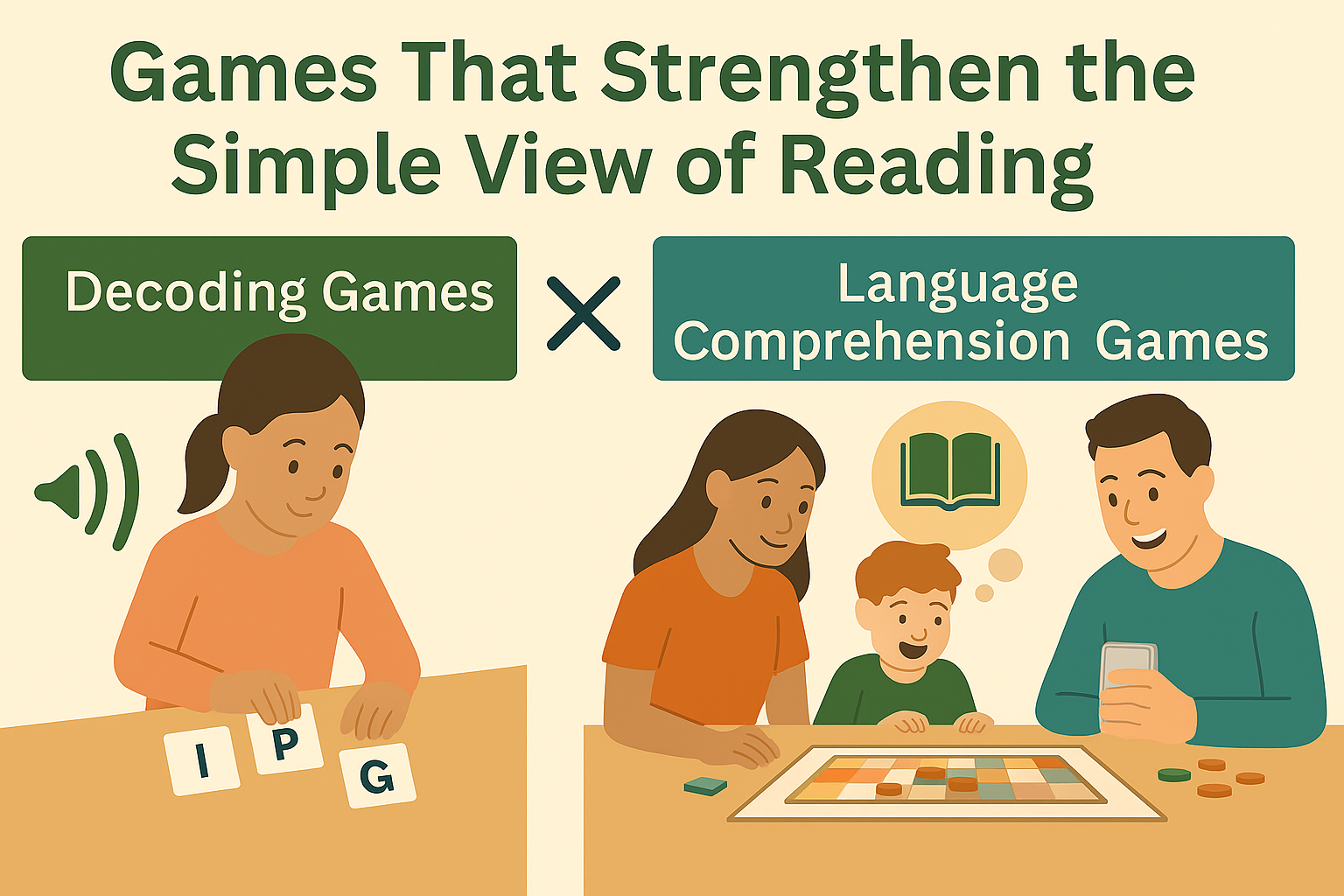
Reading comprehension develops wherever children engage in meaningful talk, problem-solving, and play. Simple games strengthen the language comprehension side of reading by building vocabulary, reasoning, inferencing, and narrative understanding. This post explores the research behind play and shares practical, low-prep games that parents, teachers, and homeschoolers can use immediately.
Literacy Landmark
Spotlighting strategies and research to support all adults who are a part of a child’s reading growth.
Research consistently shows that games support the cognitive and linguistic foundations of reading comprehension, including oral language, reasoning, motivation, and narrative development.
Key research insight:
Dickinson and Tabors (2001) found that children who regularly engaged in rich, conversational play developed significantly stronger vocabulary and later reading comprehension than peers with fewer language-rich interactions.
This work highlights that play is not peripheral to literacy. It is a primary context in which language and thinking develop.
Resource Roadmap
Offering practical books, guides, and downloadable resources that families, teachers, and homeschoolers can use right away.
Here is a practical, research-aligned resource that translates theory into everyday practice:
Einstein Never Used Flashcards (Hirsh-Pasek & Golinkoff)
This book explains how simple, low-prep games and playful interactions build vocabulary, reasoning, and flexible thinking. It offers concrete examples that families and educators can use immediately, without specialized materials.
🖋️ I have no affiliation or compensation associated with this recommendation.
Practical Play Pathways for Reading Development
All activities below can be used at home, in classrooms, or in homeschool settings by adjusting group size and materials.
Trail Tots (Birth–5)
Sound & Letter Play: Letter Go Fish
Use index cards, sticky notes, or letter tiles. Ask for sounds first (“Do you have /m/?”), then letter names, then objects that start with that sound.
Why it works:
Builds phonological awareness, letter–sound connections, and early decoding readiness.
Language & Talk: Spot It! or Picture Bingo
Have children describe, compare, and categorize images before making a match.
Why it works:
Strengthens vocabulary, oral language, categorization, and expressive language.
Trailblazers (Grades K–3)
Word Building: Boggle Variations
Generate words, then extend learning by:
Adding suffix -s
Sorting rhyming words
Using words in oral or written sentences
Why it works:
Reinforces phonics patterns, early morphology, and vocabulary development.
Story & Meaning: Story Boggle
Use generated words to create short stories with a beginning, middle, and end.
Why it works:
Supports narrative structure, sequencing, and comprehension.
Trail Masters (Grades 4–8)
Reasoning & Inference: Inference Detectives
Provide clues that imply an idea without stating it directly. Students identify and justify their reasoning.
Why it works:
Strengthens inferencing, background knowledge, and verbal reasoning.
Vocabulary & Meaning: Dixit, Codenames, or Scattergories
Connect cards or words to themes, characters, or concepts from current reading.
Why it works:
Builds semantic networks, figurative language, and flexible thinking.
How to Use This Across Settings
Parents: Choose one game and play for 10–15 minutes while talking through thinking.
Teachers: Use as a literacy warm-up, station activity, or discussion starter.
Homeschoolers: Rotate activities weekly to build consistent, low-prep routines.
Why this matters
Games do not replace reading instruction. When used intentionally, they prepare the language, reasoning, and motivation systems that reading comprehension depends on.
Journey Trail Notes Simple View of Reading
Welcome to the Journey To Better Reading Trail Notes Blog! This blog will make it easier for parents, teachers, and homeschoolers to find practical tools grounded in research to ensure that every moment you spend trying to improve reading does just that. We will start with one of the most important topics for anyone supporting a child’s reading growth: how the brain actually learns to read. Understanding this process helps parents, teachers, and homeschoolers know why certain approaches work and what to prioritize. Whether you teach in a classroom, guide learning at home, or support readers as a caregiver, you’ll find insights here that make reading instruction clearer and more purposeful.
Welcome to the Journey To Better Reading Trail Notes Blog! This blog will make it easier for parents, teachers, and homeschoolers to find practical tools grounded in research to ensure that every moment you spend trying to improve reading does just that. We will start with one of the most important topics for anyone supporting a child’s reading growth: how the brain actually learns to read. Understanding this process helps parents, teachers, and homeschoolers know why certain approaches work and what to prioritize. Whether you teach in a classroom, guide learning at home, or support readers as a caregiver, you’ll find insights here that make reading instruction clearer and more purposeful.
Literacy Landmark
Spotlighting strategies and research to support all adults who are a part of a child’s reading growth.
Reading does not develop naturally in the brain. Children must build new neural connections that link speech sounds, print, and meaning. Understanding how this process works helps parents, teachers, and homeschoolers know what to prioritize and why certain approaches are effective. One of the most influential frameworks explaining this process is the Simple View of Reading. A fantastic place to begin to understand reading development better is by watching this short video, “How the Brain Learns to Read.”
The Simple View of Reading (Gough & Tunmer, 1986) explains that reading comprehension depends on two essential components:
Decoding × Language Comprehension = Reading Comprehension
Both components must be developed intentionally. If either decoding or language comprehension is weak, reading breaks down.
Key research insight:
Decades of neuroscience and reading research show that explicit, structured instruction supports the brain in forming the sound–symbol–meaning connections required for fluent reading. This is why approaches grounded in phonics, vocabulary, and rich discussion are effective, especially for struggling readers.
Resource Roadmap
Offering practical books, guides, and downloadable resources that families, teachers, and homeschoolers can use right away.
A foundational, research-aligned resource for understanding how reading develops:
Speech to Print by Louisa Moats
This book explains the speech and language foundations of reading, clarifying why explicit instruction in sounds, letters, and word structure is critical for reading success across ages.
🖋️ This recommendation is not sponsored and reflects evidence-based practice.
Practical Pathways for Supporting Reading Development
All strategies below can be used at home, in classrooms, or in homeschool settings with minimal materials.
Trail Tots (Birth–5)
Try “Repeat and Extend.”
When a child says a single word (e.g., cup), repeat it slowly by sound, then blend it, and extend the language: “Yes, a blue cup with cold water.”
Why it works:
Builds phonological awareness while expanding vocabulary and sentence understanding.
Trailblazers (Grades K–3)
Blend one word during reading.
Pause during story time to blend a word aloud (“/s/…/ă/…/t/ → sat”), then use it in a sentence and ask a simple W-question.
Why it works:
Strengthens decoding pathways while reinforcing meaning and comprehension.
Trail Masters (Grades 4–8)
Be a word detective.
Break multisyllabic words into meaningful parts (e.g., con + struct). Discuss how each part contributes to meaning.
Why it works:
Supports accurate decoding, vocabulary growth, and deeper comprehension through morphology.
How to Use This Across Settings
Parents: Use brief, focused language moments during reading or daily routines.
Teachers: Integrate decoding and language work within the same lesson block.
Homeschoolers: Build consistent routines that connect sound work, reading, and discussion.
Why this matters
Reading instruction is most effective when it aligns with how the brain learns to read. When decoding and language comprehension are intentionally developed together, students gain stronger, more sustainable reading skills.
Reading About Reading
It might sound funny, but I spend a lot of time reading about reading. I’ve always been curious about how kids learn, and I love finding new ways to help struggling readers succeed. Here are some of the books that have shaped the way I think about teaching reading, and why I recommend them to parents, teachers, and anyone who has a child in their life. Just so you know, I don’t earn anything from sharing these books. I recommend them simply because they’ve made a big difference for me, and I think they can help you too!
It might sound funny, but I spend a lot of time reading about reading. I’ve always been curious about how kids learn, and I love finding new ways to help struggling readers succeed. Here are some of the books that have shaped the way I think about teaching reading, and why I recommend them to parents, teachers, and anyone who has a child in their life. Just so you know, I don’t earn anything from sharing these books. I recommend them simply because they’ve made a big difference for me, and I think they can help you too!
💡 Dyslexic Advantage
When I first read Dyslexic Advantage over ten years ago, it completely changed how I saw dyslexia. I learned that dyslexia isn’t a vision problem or a sign of low intelligence; it’s an unexpected difficulty with reading caused by differences in phonological processing. The book also showed me that many people with dyslexia have remarkable strengths in other areas. If you’ve ever wondered what dyslexia really is or isn’t, this book will really help you understand.
If you are thinking you don’t know someone who has dyslexia, guess again! Dyslexia affects 20 percent of the population and represents 80–90 percent of all those with learning disabilities.
I now think of dyslexia as simply a different way the brain works. People with dyslexia often have incredible strengths in creativity, problem-solving, and big-picture thinking, which is why so many highly successful people have dyslexia. At the same time, dyslexia can make working with language, reading, spelling, and even learning another language more challenging. This article explains the different areas of the brain that are involved in learning a language. If this topic interests you as much as it does me, I’d love to keep the conversation going!
The authors of Dyslexic Advantage also publish the free Dyslexic Advantage Newsletter, which I highly recommend. Each monthly issue is packed with insight for parents, educators, and anyone interested in supporting kids who learn differently. There is also a Premium Magazine chock full of even more information.
📖 Shifting the Balance (K–2 and 3–5)
I read Shifting the Balance K-2 in 2022, and when Shifting the Balance 3-5 was published, I immediately bought that too! These two books are must-reads for any K–5 teacher. They show how to shift from balanced literacy practices to approaches grounded in the Science of Reading, and they explain the “why” and “how” behind each change. Practical, thoughtful, and teacher-friendly. You can learn more about the books on their website.
🔑 7 Mighty Moves
Over the summer of 2023, I read 7 Mighty Moves. This concise, practical book is full of strategies, anecdotes, and QR codes linking to real classroom examples. It’s aimed at K–3 teachers but is helpful for reading specialists and interventionists too. I love that the author is currently teaching, so she writes from experience rather than just theory.
Watching students put all the pieces together and start reading confidently is a joy like no other for me. If you want to understand how to make that happen, whether you’re a teacher, parent, grandparent, or caregiver, these books are a great place to start.
📩 Share this post with someone who cares about a child’s reading journey. And if you want more tips, book picks, and strategies, make sure to follow along here at Journey to Better Reading and on social media.
Welcome to Journey to Better Reading
Hi! I’m Cheryl, a literacy specialist who has spent decades helping students, teachers, and families understand how reading really develops, and what to do when it doesn’t come easily. Journey to Better Reading is a place where I share clear, practical guidance rooted in how the reading brain works, so every child can become a confident, capable reader.
Hi! I’m Cheryl, a literacy specialist who has spent decades helping students, teachers, and families understand how reading really develops, and what to do when it doesn’t come easily. Journey to Better Reading is a place where I share clear, practical guidance rooted in how the reading brain works, so every child can become a confident, capable reader.
I’ve been teaching children to read since 1992, and I still love this work as much as I did on my very first day in the classroom. From fourth grade to eighth grade, from middle school reading classes to elementary interventions, I’ve seen firsthand that reading success isn’t about luck or guessing or being “a reading kid.” It’s about giving children the instruction their brains need to connect sounds, letters, and meaning.
Early in my career, I realized that simply surrounding kids with books wasn’t enough. Many students, especially those with dyslexia or persistent reading difficulties, needed explicit, systematic teaching to truly make sense of print. That led me back to graduate school for a master’s in reading, where the research aligned with what I had been observing all along: reading is a taught skill, and every child benefits from instruction that is clear, structured, and responsive.
That belief is now at the heart of Journey to Better Reading.
Here, you’ll find practical tips rooted in the Science of Reading, strategies teachers can use right away, and routines that families and homeschoolers can put into practice at home. You’ll also find explanations of the key ideas behind learning to read, like how the brain forms reading pathways and why approaches such as phonics, phonemic awareness, and morphology matter so much.
My hope is that this site becomes a reliable companion for anyone supporting a reader:
Parents trying to understand why their child is struggling
Teachers looking for routines that actually move students forward
Homeschoolers wanting clarity and confidence
Anyone learning how to build strong language and literacy foundations
No matter where you are on your journey, you’re welcome here. I’m glad you’ve found your way to this space, and I look forward to walking alongside you as we explore research, routines, and resources that make a real difference for kids.
Let’s keep moving forward, one step at a time, on the journey to better reading.