

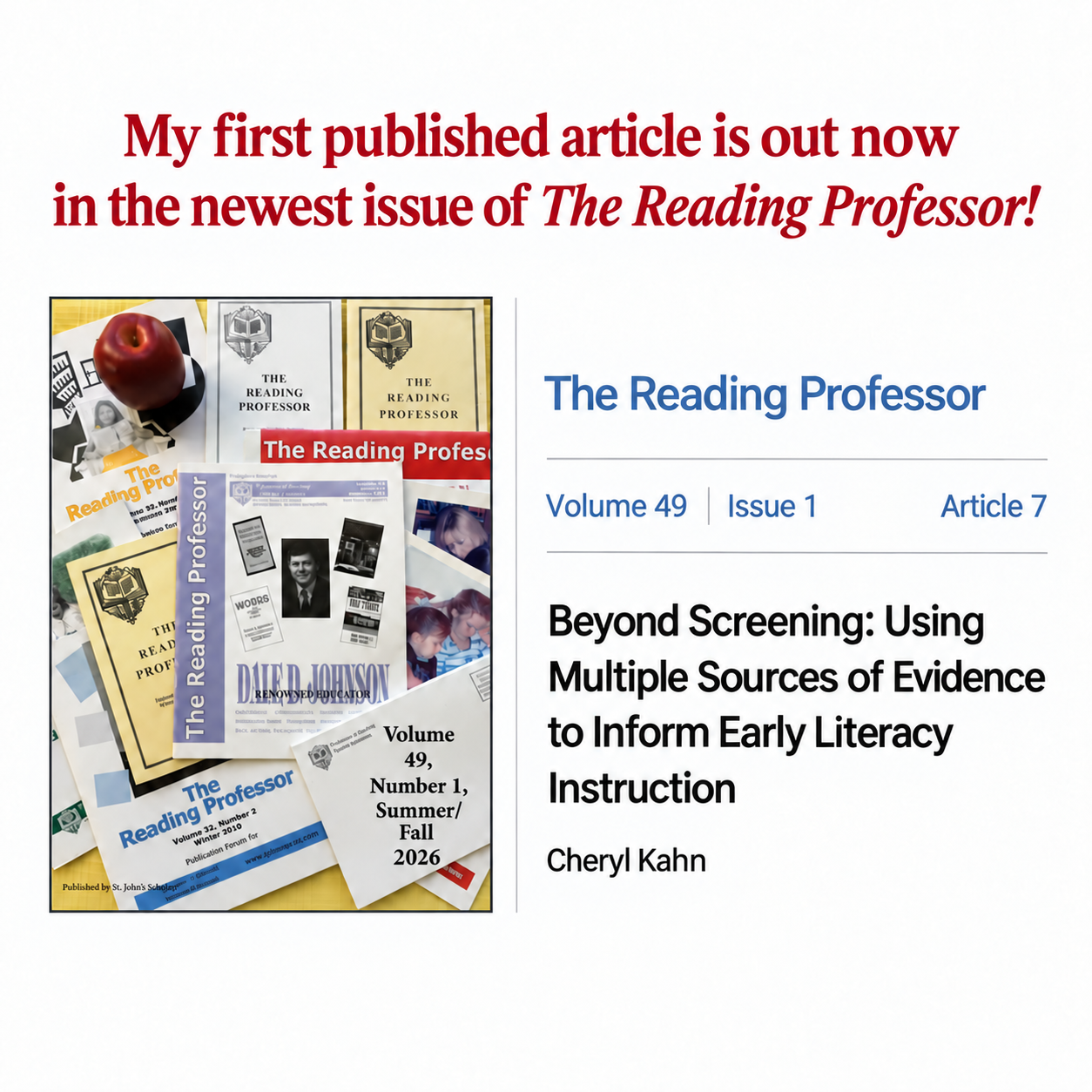
Beyond Screening: Using Multiple Sources of Evidence to Inform Early Literacy Instruction
Published in The Reading Professor
Volume 49, Issue 1, Article 7 | 2026
Moving Beyond a Single Score
Educators collect more literacy data than ever, yet screening scores alone cannot explain why a student is struggling or determine what instruction should come next.
In this article, I introduce the Multiple Sources of Evidence Framework, an approach to examining patterns across screening data, classroom observations, student work, oral language, decoding, encoding, fluency, and response to instruction. By connecting evidence across these sources, educators can develop a more complete understanding of how a student is learning to read and make responsive instructional decisions before reading difficulties become entrenched.
In This Article
Readers will explore:
Why screening should initiate inquiry rather than conclude it
How evidence across literacy domains can reveal meaningful patterns
How educators can connect assessment evidence to instructional decisions
Why a timely instructional response is essential to preventing prolonged reading difficulty
This work brings together more than 30 years of my experience as a classroom teacher, reading specialist, literacy coach, and interventionist. Its central premise is simple: the purpose of literacy assessment is not merely to identify difficulty, but to guide action.